

Meaghan Wolff wrote an article for The Washington Post on the biological reasons behind our reaction to cuteness. She cites Psychology professor Stephan Hamann's various studies on the brain's reaction to pleasant stimuli.
"[Hamann] has conducted a number of studies on brain responses to pleasant stimuli, including pictures of cute baby seals and puppies. He uses functional magnetic resonance imaging (fMRI), which is sensitive enough to measure tiny changes in brain activity.
Hamann's studies found that "cute" pictures cause increased activity in the middle area of the orbital frontal cortex, located behind the bridge of the nose, and in the amygdala, the emotion-control center of the brain responsible for fear and arousal.
According to Hamann, increased activity in the middle orbital cortex is usually associated with pleasure and positive emotion. Some evidence suggests the brain activity there is greater when the stimulus is "neotenous," which is to say it has juvenile characteristics -- a button nose, big eyes, a large wobbly head, chubby extremities or pudgy cheeks."
"Men and women showed nearly identical responses to cute stimuli, even if for social reasons they rate it differently."
Showing posts with label Cute Literary Sources. Show all posts
Showing posts with label Cute Literary Sources. Show all posts
Wednesday, October 29, 2008

Monday, October 27, 2008
Kawaii: The Culture of Cute
Excerpts from Natalie Avella's Graphic Japan: From Woodblock and Zen to Manga and Kawaii.
A Brief History of Kawaii
"Kawaii, meaning 'cute,' must be one of the most loved and most widely used words in Japan. Kawaii essentially means 'childlike,' and, according to academic Sharon Kinsella, who has studied the phenomenon, it celebrates all that is: 'sweet, adorable, innocent, pure, simple, genuine, gentle, vulnerable, weak, and inexperienced in social behavior and physical appearance.' ...The word kawaii is derived from kawajushi, a word that first appeared in dictionaries prior to 1945. It had principal meanings of 'shy' or 'embarrassed,' but possessed secondary meanings such as 'pathetic,' 'vulnerable,' 'darling,' 'loveable,' and 'small.'" (211-213)
"Kawaii first appeared in the 1970s, at the same time as the emergence of a new craze among teenagers, especially girls, for cute, babyish handwriting, ...[which was a rebellion] against traditional Japanese culture and identifying with European culture. ...As the handwriting craze developed, so did a fashion among young adults for childish behavior, baby-talk, and wearing childish clothes. ...Dressing up continues to be practiced by Japanese youth." (213)

"A love of cute characters appears to transcend both age and gender." (211)
"Cute is not just eye candy on the surfaces of consumer products; kawaii characters also function as a polite way of conferring guidance and information to the public. ...In a country where people are brought up on a diet of manga and anime, cartoons are a common language." (212)
"Creating quasi-relationships with cute, inanimate objects is a relief from, or compensation for, the alienation that many people feel." (214)
"For corporate business, kawaii helps to give a friendly face to an otherwise impersonal corporate identity, giving people a way to build a personal relationship with a particular brand." (212)
"Japanese tend to enjoy funny topics for daily conversation, such as 'what kind of dumb things they've done,' or descriptions of their own mistakes. This is an attempt to disarm the listener, and to develop more intimate relationships. Similarly, funny mascots tell you that the owner is friendly and unpretentious." (212)
"In Japan, group harmony is valued above individual expression." (214)
Other Sources for Studies on Kawaii
"Modern consumers might not be able to meet and develop relationships enough with people, but the implication of cute goods design was that they could always attempt to develop them with cute objects." Source: Kinsella, Sharon. "Cuties in Japan." Women, Media and Consumption in Japan. University of Hawaii Press.
"Kawaii gives people a way to hang onto childhood and thereby postpone the pressures of adulthood. ...Adulthood was not viewed as a source of freedom and independence, it was viewed as quite the opposite, as a period of restrictions and hard work. ...Cute fashions idolize childhood because it is seen as a place of individual freedom unattainable in society." (Kinsella)
"Wearing a cute mascot in public is a way to communicate with others like yourself. There is a consensus that a person who likes cute things is good. If you show a funny mascot, people assume that you are an easy-going and open-minded person. Your mascot makes people around you believe you are more approachable. The mascot also" Source: Kato, Miki. "Cute Culture." Eye. Issue 44 Summer 2002.
"If you invite a Japanese acquaintance to dinner, and ask them what kind of restaurant they would like to go to, they will probably answer, 'anywhere you like.' Not having an individual voice is considered a traditional virtue in Japan and this is based on the idea of amae," which means to "act like a child." (Kato)
A Brief History of Kawaii
"Kawaii, meaning 'cute,' must be one of the most loved and most widely used words in Japan. Kawaii essentially means 'childlike,' and, according to academic Sharon Kinsella, who has studied the phenomenon, it celebrates all that is: 'sweet, adorable, innocent, pure, simple, genuine, gentle, vulnerable, weak, and inexperienced in social behavior and physical appearance.' ...The word kawaii is derived from kawajushi, a word that first appeared in dictionaries prior to 1945. It had principal meanings of 'shy' or 'embarrassed,' but possessed secondary meanings such as 'pathetic,' 'vulnerable,' 'darling,' 'loveable,' and 'small.'" (211-213)
"Kawaii first appeared in the 1970s, at the same time as the emergence of a new craze among teenagers, especially girls, for cute, babyish handwriting, ...[which was a rebellion] against traditional Japanese culture and identifying with European culture. ...As the handwriting craze developed, so did a fashion among young adults for childish behavior, baby-talk, and wearing childish clothes. ...Dressing up continues to be practiced by Japanese youth." (213)

"A love of cute characters appears to transcend both age and gender." (211)
"Cute is not just eye candy on the surfaces of consumer products; kawaii characters also function as a polite way of conferring guidance and information to the public. ...In a country where people are brought up on a diet of manga and anime, cartoons are a common language." (212)
"Creating quasi-relationships with cute, inanimate objects is a relief from, or compensation for, the alienation that many people feel." (214)
"For corporate business, kawaii helps to give a friendly face to an otherwise impersonal corporate identity, giving people a way to build a personal relationship with a particular brand." (212)
"Japanese tend to enjoy funny topics for daily conversation, such as 'what kind of dumb things they've done,' or descriptions of their own mistakes. This is an attempt to disarm the listener, and to develop more intimate relationships. Similarly, funny mascots tell you that the owner is friendly and unpretentious." (212)
"In Japan, group harmony is valued above individual expression." (214)
Other Sources for Studies on Kawaii
"Modern consumers might not be able to meet and develop relationships enough with people, but the implication of cute goods design was that they could always attempt to develop them with cute objects." Source: Kinsella, Sharon. "Cuties in Japan." Women, Media and Consumption in Japan. University of Hawaii Press.
"Kawaii gives people a way to hang onto childhood and thereby postpone the pressures of adulthood. ...Adulthood was not viewed as a source of freedom and independence, it was viewed as quite the opposite, as a period of restrictions and hard work. ...Cute fashions idolize childhood because it is seen as a place of individual freedom unattainable in society." (Kinsella)
"Wearing a cute mascot in public is a way to communicate with others like yourself. There is a consensus that a person who likes cute things is good. If you show a funny mascot, people assume that you are an easy-going and open-minded person. Your mascot makes people around you believe you are more approachable. The mascot also" Source: Kato, Miki. "Cute Culture." Eye. Issue 44 Summer 2002.
"If you invite a Japanese acquaintance to dinner, and ask them what kind of restaurant they would like to go to, they will probably answer, 'anywhere you like.' Not having an individual voice is considered a traditional virtue in Japan and this is based on the idea of amae," which means to "act like a child." (Kato)
A Biological Homage to Mickey Mouse
Snippets from a short article written by Stephen Jay Gould (in his larger collection of articles called The Panda's Thumb), centered on Mickey Mouse's evolution during 50 years.
"The original Mickey was a rambunctious, even slightly sadistic fellow. ...As Mickey's personality softened, his appearance changed. Many Disney fans are aware of this transformation through time, but few (I suspect) have recognized the coordinating theme behind all the alterations. ...In short, the blander and inoffensive Mickey became progressively more juvenile in appearance." (95-97)

Copyright Walt Disney Productions
"To give him the shorter and pudgier legs of youth, [Disney artists] lowered his pants line and covered his spindly legs with a baggy outfit. (His arms and legs also thickened substantially–and acquired joints for a floppier appearance.) His head grew relatively larger and its features more youthful. The length of Mickey's snout has not altered, but decreasing protrusion is more subtly suggested by a pronounced thickening. Mickey's eye has grown in two modes: first, by a major, discontinuous evolutionary shift as the entire eye of the ancestral Mickey became the pupil of his descendants, and second, by gradual increase thereafter. ...Mickey's ears moved back, increasing the distance between nose and ears, and giving him a rounded, rather than sloping, forehead." (98-99)
These features match almost perfectly with Lorenz' features of youth: "a relatively large head, predominance of the brain capsule, large and low-lying eyes, bulging cheek region, short and thick extremities, a springy elasticity, and clumsy movements."
"[We must] ask why Disney chose to change his most famous character so gradually and persistently in the same direction? ...The abstract features of human childhood elicit powerful emotional responses in us, even when they occur in other animals. I submit that Mickey Mouse's evolutionary road down the course of his own growth in reverse reflects the unconscious discovery of this biological principal by Disney and his artists. ...To this extent, the magic kingdom trades on biological illusion–our ability to abstract and our propensity to transfer inappropriately to other animals the fitting responses we make to changing form in the growth of our own bodies." (100-104)
Basically, Mickey changed in order to keep with one of Walt Disney's many rules of thumb: "Keep it cute!"

Copyright Walt Disney Productions
"The original Mickey was a rambunctious, even slightly sadistic fellow. ...As Mickey's personality softened, his appearance changed. Many Disney fans are aware of this transformation through time, but few (I suspect) have recognized the coordinating theme behind all the alterations. ...In short, the blander and inoffensive Mickey became progressively more juvenile in appearance." (95-97)

Copyright Walt Disney Productions
"To give him the shorter and pudgier legs of youth, [Disney artists] lowered his pants line and covered his spindly legs with a baggy outfit. (His arms and legs also thickened substantially–and acquired joints for a floppier appearance.) His head grew relatively larger and its features more youthful. The length of Mickey's snout has not altered, but decreasing protrusion is more subtly suggested by a pronounced thickening. Mickey's eye has grown in two modes: first, by a major, discontinuous evolutionary shift as the entire eye of the ancestral Mickey became the pupil of his descendants, and second, by gradual increase thereafter. ...Mickey's ears moved back, increasing the distance between nose and ears, and giving him a rounded, rather than sloping, forehead." (98-99)
These features match almost perfectly with Lorenz' features of youth: "a relatively large head, predominance of the brain capsule, large and low-lying eyes, bulging cheek region, short and thick extremities, a springy elasticity, and clumsy movements."
"[We must] ask why Disney chose to change his most famous character so gradually and persistently in the same direction? ...The abstract features of human childhood elicit powerful emotional responses in us, even when they occur in other animals. I submit that Mickey Mouse's evolutionary road down the course of his own growth in reverse reflects the unconscious discovery of this biological principal by Disney and his artists. ...To this extent, the magic kingdom trades on biological illusion–our ability to abstract and our propensity to transfer inappropriately to other animals the fitting responses we make to changing form in the growth of our own bodies." (100-104)
Basically, Mickey changed in order to keep with one of Walt Disney's many rules of thumb: "Keep it cute!"

Copyright Walt Disney Productions
Sunday, October 26, 2008
Emotional Design
The following are a few choice quotes from Donald A. Norman's Emotional Design: Why We Love (or Hate) Everyday Things:
"[We have a] tendency to read emotional responses into anything, animate or not. We are social creatures, biologically prepared to interact with others, and the nature of that interaction depends very much on our ability to understand another's mood. Facial expressions and body language are automatic, indirect results of our affective state, in part because affect is closely tied to behavior. ...We have evolved to interpret even the most subtle of indicators. ...Interpretations of inanimate objects might seem bizarre, but the impulse comes from the same source–our automatic interpretive mechanisms. We interpret everything we experience, much of it in human terms. This is called anthropomorphism, the attribution of human motivations, beliefs, and feelings to animals and inanimate things. The more behavior something exhibits, the more we are apt to do this." (135-136)
This relates well to Lorenz' Innate Releasing Mechanism, an involuntary biological response to an experience.

Stefano Pirovano's Te o Tea Strainer, made by Alessi.
"At first sight, the arms and legs of the figure are simply cute, but when it becomes apparent that the cuteness is also functional, then 'cute' becomes transformed into 'pleasure' and 'fun,' and this, moreover, is long-lasting. ...I spent much of the next hour trying to understand what transforms an impression of shallow cuteness into one of deep, long-lasting pleasure." (106)

"The essence of the surprise was the separation between the two viewings: first the tea strainer alone, then on the teacup. ...What transforms the strainer from 'cute' into 'fun'? Is it surprise? Is it cleverness? Certainly both of those traits play a big role." (106)
Here, Norman relates cuteness with pleasure, which brings me to designer and human factors expert Patrick Jordan's Four Kinds of Pleasure:
Norman also states that 'fun' and 'pleasurable' are still very elusive concepts.
"What is delightful depends a lot upon the context. The actions of a kitten or human baby may be judged fun and cute, but the very same actions performed by a cat or human adult can be judged irritating or disgusting." (106)
He suggests that more than one type of pleasure is in play at any one time. Visual cues may be what initially attracts you to a kitten, but the socio-pleasure you get from interaction with the kitten or the mental high you get from playing with the kitten (the psycho-pleasure) are what forge the bond between you and the animal.
"[We have a] tendency to read emotional responses into anything, animate or not. We are social creatures, biologically prepared to interact with others, and the nature of that interaction depends very much on our ability to understand another's mood. Facial expressions and body language are automatic, indirect results of our affective state, in part because affect is closely tied to behavior. ...We have evolved to interpret even the most subtle of indicators. ...Interpretations of inanimate objects might seem bizarre, but the impulse comes from the same source–our automatic interpretive mechanisms. We interpret everything we experience, much of it in human terms. This is called anthropomorphism, the attribution of human motivations, beliefs, and feelings to animals and inanimate things. The more behavior something exhibits, the more we are apt to do this." (135-136)
This relates well to Lorenz' Innate Releasing Mechanism, an involuntary biological response to an experience.

Stefano Pirovano's Te o Tea Strainer, made by Alessi.
"At first sight, the arms and legs of the figure are simply cute, but when it becomes apparent that the cuteness is also functional, then 'cute' becomes transformed into 'pleasure' and 'fun,' and this, moreover, is long-lasting. ...I spent much of the next hour trying to understand what transforms an impression of shallow cuteness into one of deep, long-lasting pleasure." (106)

"The essence of the surprise was the separation between the two viewings: first the tea strainer alone, then on the teacup. ...What transforms the strainer from 'cute' into 'fun'? Is it surprise? Is it cleverness? Certainly both of those traits play a big role." (106)
Here, Norman relates cuteness with pleasure, which brings me to designer and human factors expert Patrick Jordan's Four Kinds of Pleasure:
- Physio-pleasure: Sights, sounds, smells, taste, and touch.
- Socio-pleasure: Derived from interaction/communication with others. Usage.
- Psycho-pleasure: Deals with one's reactions and psychological state during use or interaction. Resides at behavioral level.
- Ideo-pleasure: Reflection of the experience/interaction. Appreciation of object. For example, if one displays the object prominently, it gives them ideo-pleasure to show their value judgments to others.
Norman also states that 'fun' and 'pleasurable' are still very elusive concepts.
"What is delightful depends a lot upon the context. The actions of a kitten or human baby may be judged fun and cute, but the very same actions performed by a cat or human adult can be judged irritating or disgusting." (106)
He suggests that more than one type of pleasure is in play at any one time. Visual cues may be what initially attracts you to a kitten, but the socio-pleasure you get from interaction with the kitten or the mental high you get from playing with the kitten (the psycho-pleasure) are what forge the bond between you and the animal.
The MINI Cooper

Stock Photo.

Blueprints.
Reviews:
"Whatever one may think of the Mini Cooper's dynamic attributes, which range from very good to marginal, it is fair to say that almost no new vehicle in recent memory has provoked more smiles." Source: Swan, Tony. "Behind the Wheel/Mini Cooper; Animated Short, Dubbed in German." The New York Times.2 June, 2002.
"Evoke(s) strong, positive emotions such as love, attachment, and happiness... The car is so much fun to look at and drive that... you overlook its faults." (7) Source: Norman, Donald A. Emotional Design: Why We Love (or Hate) Everyday Things. Perseus Books Group; Cambridge: 2004.
This quote, by Norman, makes a similar assumption as Konrad Lorenz when he discussed humans' proclivity toward experiential attachment. If a possession is attractive to you, you will become attached to it and be happy when you interact with it. When this happens, you are more likely to overlook the object's negative aspects.
"But none of that is the real reason we're buying the Mini. The car is cute. It has a magnetic personality. We loved its oversized speedometer and the wacky location of its tachometer atop the steering column. We loved the reaction it drew from onlookers everywhere. ...Some of our friends and family members also called the Mini Cooper 'cute' but said they would never buy a car 'that small.' We don't care. We drove it. We love it." Source: Brown, Warren. "Cute Little Detour? We'll Take It!" The Washington Post. 2 June, 2002.

"Hands down, the MINI Cooper is one of the cutest, most adorable cars on the road. The slightly prominent headlamps and oval grille convey the look of a surprised toddler on Christmas morning. The car's profile looks like a baby bootie, ready to be bronzed and displayed on a mantel." Bugg, Sean. "The Cute Factor." Metro Weekly. 3 March, 2005.
Results from Cute Survey:
"It's so small and has a rounded silhouette--seems to have a 'face,' too."
"Small. Round features such as the lights and rear-view mirrors."
"The name alone is cute. ...It’s little and can navigate down small streets like in all those slightly comical chase scenes, the headlights are like big eyes."
The MINI set a precedent when it was redesigned in 2001. Today's automakers realize the power of cuteness in car design, and designers have continued to create evermore cute automobiles.

The Smart Car.

The Nissan Pivo Concept Car.
Friday, October 24, 2008
Cuteness and the Economic Crisis
I read an interesting article over at Change Order, a blog about the integration of design and business.
David Sherwin, who wrote the article, made an interesting speculation: With the recent "financial tsunami" that has hit the world, companies are making a mad dash to merge in order stave off bankruptcy. For example, WaMu's merger with Chase. With that, new questions emerge: What will happen to their branding? And with the unavoidable recession looming in consumers' minds, can cute branding survive?
"WaMu had invested countless billions of dollars to paint a perky, friendly face on money. The WaMu marketing machine had been laser-focused on less-sophisticated, higher-risk consumers, putting forth a friendly facade that was dubbed by their former CEO, Kerry Killinger, as the 'Wal-Mart of Banking.'"
Just check out this ad for WaMu that uses the irresistability of puppies and the adorable tagline "Whoo-Hoo!" to sell its services:
He suggests that this fresh, young image will now serve to repel the very same people it used to attract. And his logic, simply put, is thus:
Cuteness relies on optimism, and optimism relies on prosperity. Without that prosperity, people are no longer looking for the cute, friendly face in advertising. They are looking for a real, grown up, fact-based brand. While I believe this to be true, I also think that cuteness in advertising still has its place.
Advertising relies on one basic thing: happiness. Cuteness can bring that happiness–it can reassure, and in these troubling times, reassurance is key.
David Sherwin, who wrote the article, made an interesting speculation: With the recent "financial tsunami" that has hit the world, companies are making a mad dash to merge in order stave off bankruptcy. For example, WaMu's merger with Chase. With that, new questions emerge: What will happen to their branding? And with the unavoidable recession looming in consumers' minds, can cute branding survive?
"WaMu had invested countless billions of dollars to paint a perky, friendly face on money. The WaMu marketing machine had been laser-focused on less-sophisticated, higher-risk consumers, putting forth a friendly facade that was dubbed by their former CEO, Kerry Killinger, as the 'Wal-Mart of Banking.'"
Just check out this ad for WaMu that uses the irresistability of puppies and the adorable tagline "Whoo-Hoo!" to sell its services:
He suggests that this fresh, young image will now serve to repel the very same people it used to attract. And his logic, simply put, is thus:
Cuteness relies on optimism, and optimism relies on prosperity. Without that prosperity, people are no longer looking for the cute, friendly face in advertising. They are looking for a real, grown up, fact-based brand. While I believe this to be true, I also think that cuteness in advertising still has its place.
Advertising relies on one basic thing: happiness. Cuteness can bring that happiness–it can reassure, and in these troubling times, reassurance is key.
Saturday, October 18, 2008
Cute, Quaint, Hungry, and Romantic
I've taken some quotes from Daniel Harris's Cute, Quaint, Hungry, and Romantic: The Aesthetics of Consumerism. This book is far from a study in consumerism–I'd say it is more an anti-consumerist opinion piece. And while Harris makes some interesting connections, his ready-made hatred of anything popular or unrealistic turns any semblance of fact into a wordy rant. He goes so far as to compare teddy bears to adult sex dolls and the act of hugging a stuffed animal to necrophilia. He operates from as distorted a world view as those he demeans:
"The cute world view is one of massive human chauvinism, which rewrites the universe according to an iconographic agenda dominated by the pathetic fallacy... The cute vision of the natural world is a world without nature, one that annihilates "otherness," ruthlessly suppresses the non-human, and allows nothing, including our children, to be separate and distinct from us." (12)
While he completely skips over scientific explanations and evolutionary theories, he does make an important case for the social implications of cuteness, so it's included in my research. Read on for some more quotes:
"Cuteness suggests guilelessness, simplicity, and a refreshing lack of affectation." (2-3)
"Cuteness is not an aesthetic in an ordinary sense of the word and must by no means be mistaken for the physically appealing, the attractive. In fact, it is closely linked to the grotesque, the malformed." (3)
"The grotesque is cute because the grotesque is pitiable, and pity is the primary emotion of the seductive and manipulative aesthetic that arouses our sympathies... The aesthetic of cuteness creates a class of outcasts and mutations." (4)
"Something becomes cute not necessarily because of a quality it has but because of a quality it lacks, a certain neediness and inability to stand alone, as if it were an indigent starveling, lonely and rejected because of hideousness we find more touching than unsightly." (4)
"Cuteness has become essential to the marketplace, in that advertisers have learned that consumers will 'adopt' products that create, often in their packaging alone, an aura of motherlessness, ostracism, and melancholy." (5)
"Cuteness, in short, is not something we find in our children but something we do to them... it almost always involves an act of sadism on the part of its creator, who makes an unconscious attempt to maim, hobble, and embarrass the thing he seeks to idolize." (5)
"Adorable things are often most adorable when in the middle of a pratfall or a blunder." (6)
"Although the gaze we turn on the cute thing seems maternal and solicitous, it is in actuality transformative and will stop at nothing to appease its hunger for expressing pity and big-heartedness, even at the cost of mutilating the object of its affections." (6)
"If cuteness is the aesthetic of deformity and dejection, it is also the aesthetic of sleep." (7)
"The imitative nature of cuteness can also be seen in the relation of the aesthetic to precocity." Precocity is the development of certain capabilities at an earlier age than usual.
Overall, it's a good read, but rather depressing. Time for a kitten picture.

There. I'm better.
"The cute world view is one of massive human chauvinism, which rewrites the universe according to an iconographic agenda dominated by the pathetic fallacy... The cute vision of the natural world is a world without nature, one that annihilates "otherness," ruthlessly suppresses the non-human, and allows nothing, including our children, to be separate and distinct from us." (12)
While he completely skips over scientific explanations and evolutionary theories, he does make an important case for the social implications of cuteness, so it's included in my research. Read on for some more quotes:
"Cuteness suggests guilelessness, simplicity, and a refreshing lack of affectation." (2-3)
"Cuteness is not an aesthetic in an ordinary sense of the word and must by no means be mistaken for the physically appealing, the attractive. In fact, it is closely linked to the grotesque, the malformed." (3)
"The grotesque is cute because the grotesque is pitiable, and pity is the primary emotion of the seductive and manipulative aesthetic that arouses our sympathies... The aesthetic of cuteness creates a class of outcasts and mutations." (4)
"Something becomes cute not necessarily because of a quality it has but because of a quality it lacks, a certain neediness and inability to stand alone, as if it were an indigent starveling, lonely and rejected because of hideousness we find more touching than unsightly." (4)
"Cuteness has become essential to the marketplace, in that advertisers have learned that consumers will 'adopt' products that create, often in their packaging alone, an aura of motherlessness, ostracism, and melancholy." (5)
"Cuteness, in short, is not something we find in our children but something we do to them... it almost always involves an act of sadism on the part of its creator, who makes an unconscious attempt to maim, hobble, and embarrass the thing he seeks to idolize." (5)
"Adorable things are often most adorable when in the middle of a pratfall or a blunder." (6)
"Although the gaze we turn on the cute thing seems maternal and solicitous, it is in actuality transformative and will stop at nothing to appease its hunger for expressing pity and big-heartedness, even at the cost of mutilating the object of its affections." (6)
"If cuteness is the aesthetic of deformity and dejection, it is also the aesthetic of sleep." (7)
"The imitative nature of cuteness can also be seen in the relation of the aesthetic to precocity." Precocity is the development of certain capabilities at an earlier age than usual.
Overall, it's a good read, but rather depressing. Time for a kitten picture.
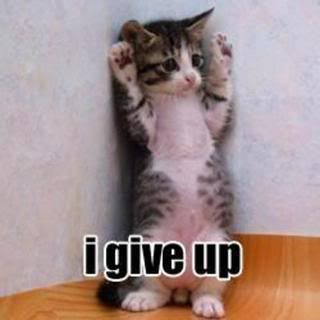
There. I'm better.
Thursday, October 16, 2008
The Science of Cuteness
This is the transcript from a report done by Jeanne Moos of CNN. You can also view the video here. I dare you to get through it without smiling, laughing, or squealing in delight.
JEANNE MOOS, CNN CORRESPONDENT (voice over): Sure hope Shiloh isn't shy, because her face is plastered all over the place
UNIDENTIFIED FEMALE: The lips, the nose, the eyes, the everything.
UNIDENTIFIED FEMALE: Yes.
MOOS: But all this rhapsodizing about the Brangelina baby got us wondering.
UNIDENTIFIED FEMALE: How can you define cute?
MOOS: It's that thing that makes you go...
UNIDENTIFIED FEMALE: Oh.
MOOS: But there is a science to cute, and a poster child is the panda bear. For instance, the cub at Washington's National Zoo.
(on camera): Which one is cuter to you?
UNIDENTIFIED FEMALE: The baby panda.
UNIDENTIFIED FEMALE: The panda.
UNIDENTIFIED MALE: The baby.
UNIDENTIFIED MALE: Oh, that panda bear is so cute.
UNIDENTIFIED MALE: That's a cute baby.
UNIDENTIFIED MALE: And I love children, but I think the panda is just so cute. Look at the eyes.
MOOS (voice over): Researchers say humans react to forward- facing eyes set low on a big, round face, with prominent ears, floppy limbs, and a waddling gate. No wonder folks seem attracted to penguins, both real and animated.
They say cuteness stimulates the same pleasure centers in the brain that are aroused by sex, food and drugs. We say "ah" over the pandas. Photographers even said "ah" over a wax version of the Brangelina baby introduced at Madame Tussauds.
UNIDENTIFIED MALE: That baby is very cute.
UNIDENTIFIED MALE: Probably the panda because the baby is going to turn into a disgusting teenager.
MOOS: Researchers say humans react to the vulnerability of the young.
UNIDENTIFIED FEMALE: I think he kind of shows a vulnerable side.
MOOS: Which is good for evolution, since it brings out protective instincts.
UNIDENTIFIED FEMALE: Hold it. Hold it.
MOOS: There are Web sites devoted to cute, like Cute Overload, which features nothing but cute pictures and videos that people submit. Sleepiness seems to add to the vulnerability we find so appealing.
There's even a section for cute products. And who doesn't see the round face factor in cute cars like the VW Bug and the Mini?
The opposite of cute overload is ugly overload, featuring cow tongues and bats, not to mention El Pacas (ph). But sometimes homeliness can be cute.
One of the most popular stories I have ever done was on Sam, the three-time winner of the ugliest dog contest, now deceased. And as for the smackdown between the panda and the Brangelina baby...
UNIDENTIFIED MALE: This bear is much cuter than that baby. I know that baby cries. And that bear, well, he just looks too damn cute.
MOOS: ... the panda won, 16-12, a vote not worth losing sleep over.
Jeanne Moos, CNN, New York.
JEANNE MOOS, CNN CORRESPONDENT (voice over): Sure hope Shiloh isn't shy, because her face is plastered all over the place
UNIDENTIFIED FEMALE: The lips, the nose, the eyes, the everything.
UNIDENTIFIED FEMALE: Yes.
MOOS: But all this rhapsodizing about the Brangelina baby got us wondering.
UNIDENTIFIED FEMALE: How can you define cute?
MOOS: It's that thing that makes you go...
UNIDENTIFIED FEMALE: Oh.
MOOS: But there is a science to cute, and a poster child is the panda bear. For instance, the cub at Washington's National Zoo.
(on camera): Which one is cuter to you?
UNIDENTIFIED FEMALE: The baby panda.
UNIDENTIFIED FEMALE: The panda.
UNIDENTIFIED MALE: The baby.
UNIDENTIFIED MALE: Oh, that panda bear is so cute.
UNIDENTIFIED MALE: That's a cute baby.
UNIDENTIFIED MALE: And I love children, but I think the panda is just so cute. Look at the eyes.
MOOS (voice over): Researchers say humans react to forward- facing eyes set low on a big, round face, with prominent ears, floppy limbs, and a waddling gate. No wonder folks seem attracted to penguins, both real and animated.
They say cuteness stimulates the same pleasure centers in the brain that are aroused by sex, food and drugs. We say "ah" over the pandas. Photographers even said "ah" over a wax version of the Brangelina baby introduced at Madame Tussauds.
UNIDENTIFIED MALE: That baby is very cute.
UNIDENTIFIED MALE: Probably the panda because the baby is going to turn into a disgusting teenager.
MOOS: Researchers say humans react to the vulnerability of the young.
UNIDENTIFIED FEMALE: I think he kind of shows a vulnerable side.
MOOS: Which is good for evolution, since it brings out protective instincts.
UNIDENTIFIED FEMALE: Hold it. Hold it.
MOOS: There are Web sites devoted to cute, like Cute Overload, which features nothing but cute pictures and videos that people submit. Sleepiness seems to add to the vulnerability we find so appealing.
There's even a section for cute products. And who doesn't see the round face factor in cute cars like the VW Bug and the Mini?
The opposite of cute overload is ugly overload, featuring cow tongues and bats, not to mention El Pacas (ph). But sometimes homeliness can be cute.
One of the most popular stories I have ever done was on Sam, the three-time winner of the ugliest dog contest, now deceased. And as for the smackdown between the panda and the Brangelina baby...
UNIDENTIFIED MALE: This bear is much cuter than that baby. I know that baby cries. And that bear, well, he just looks too damn cute.
MOOS: ... the panda won, 16-12, a vote not worth losing sleep over.
Jeanne Moos, CNN, New York.
Hello Kitty: One Nation Under Cute
This is a short article on the history and social implications of kawaii, the Japanese culture of cute.
They claim that adults not only substitute cute objects for children, they also wish to be a child. This is an entirely new view on how cute can permeate a culture. It introduces the idea that social rigidity can have a far reaching effect on its members. When you are allowed to be independent at a young age and then forced into a highly structured adult life, you can want so much for your youth that you begin to live it. It is less a statement about cuteness and more about independence. The widespread popularity of cuteness is more a result of intense marketing and a consumer-driven society.
You can read the whole article at Psychology Today.
"Psychologists believe that cuteness is a function of resemblance to human infants, to whom we're programmed to respond sympathetically because of their helplessness. And Japan may have a surplus of unused parenting instincts, given that the country has one of the world's lowest birth rates (and one of the highest ages of marriage)."
They claim that adults not only substitute cute objects for children, they also wish to be a child. This is an entirely new view on how cute can permeate a culture. It introduces the idea that social rigidity can have a far reaching effect on its members. When you are allowed to be independent at a young age and then forced into a highly structured adult life, you can want so much for your youth that you begin to live it. It is less a statement about cuteness and more about independence. The widespread popularity of cuteness is more a result of intense marketing and a consumer-driven society.
You can read the whole article at Psychology Today.
Subscribe to:
Posts (Atom)